|

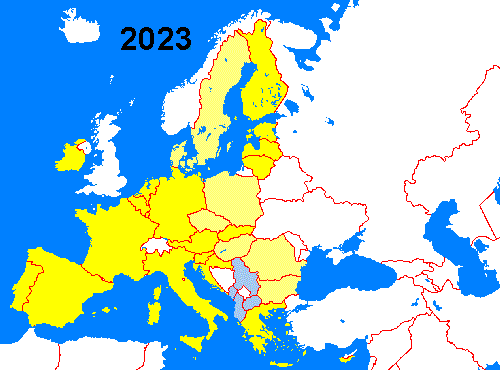
 = EU members
with the euro as currency
(Ireland, Finland, Estonia, Latvia,
Lithuania, Germany, The Netherlands, Belgium, Luxembourg, France, Spain,
Portugal, Italy, Austria, Slovakia, Slovenia, Croatia, Bulgaria, Greece, Cyprus and
Malta)
= EU members
with the euro as currency
(Ireland, Finland, Estonia, Latvia,
Lithuania, Germany, The Netherlands, Belgium, Luxembourg, France, Spain,
Portugal, Italy, Austria, Slovakia, Slovenia, Croatia, Bulgaria, Greece, Cyprus and
Malta)
 =
EU members that have not converted their currencies to the euro
(Denmark, Sweden, Poland, Czech republic, Hungary
and Romania)
=
EU members that have not converted their currencies to the euro
(Denmark, Sweden, Poland, Czech republic, Hungary
and Romania)
 = Candidate countries negotiating for membership
(Serbia, Montenegro, Albania, North Macedonia, Moldavia and Ukraine)
= Candidate countries negotiating for membership
(Serbia, Montenegro, Albania, North Macedonia, Moldavia and Ukraine)
 = New
member countries (refer to the maps below) = New
member countries (refer to the maps below)
 = Countries that left the EU (refer to the maps below)
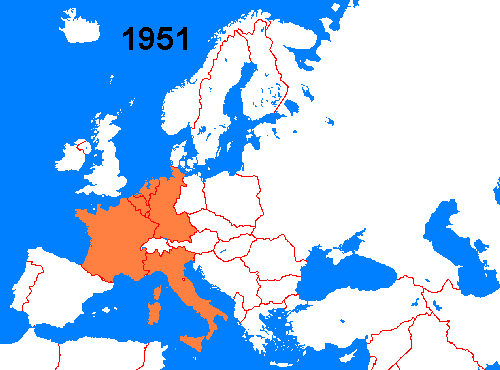
The predecessor to the present EU was the European Coal and Steel Community,
which was founded in 1951 with the signing of the Treaty of Paris. The founding
countries were France, Germany, the Netherlands, Belgium, Luxembourg and Italy.
This economic cooperation was then expanded to encompass the entire economic
sphere when the Treaty of Rome was signed in 1957 and the European Economic
Community (EEC) was created. However, already from the beginning there was an
ambition that this cooperation should not only cover the economic sphere
but also have a political dimension. To underline the increasing and expanding
integration of Europe, all parts of the cooperation were collectively known as the
European Community (EC). And when the political dimension was finally
realized with the Treaty of Maastricht in 1993 the entire organisation was named the
European Union (EU). One of the parts of the Treaty of Maastricht was the
establishment of an economic and monetary union, this became physical reality
in 2002 when 12 member countries exchanged their national currencies to the Euro.
Slovenia was the first of the new member countries to adopt the Euro (2007) and it
was followed by Cyprus, Malta, Slovakia, Estonia, Latvia and Lithuania 2008-2015. The other
member countries will do the same when their economies and popular opinion will permits it.
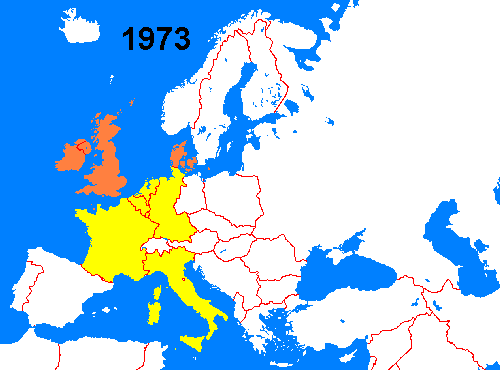
The EC's customs union and its supranational element meant that several western European
countries were unwilling to become members. Instead they created the European Free Trade
Association (EFTA). This free trade area was dominated by the United Kingdom and when they
decided to join the EC in 1973 they were accompanied by Ireland and Denmark. It was also
the intention that Norway would join at the same time but the Norwegians opposed their
politicians and voted no in a referendum.
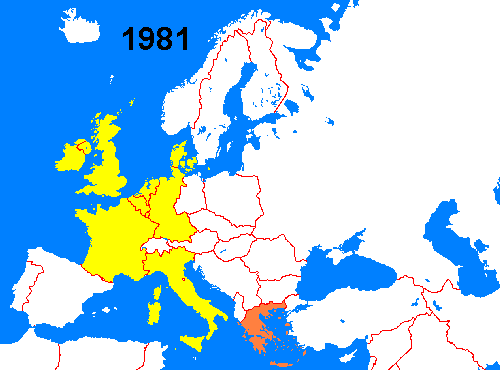
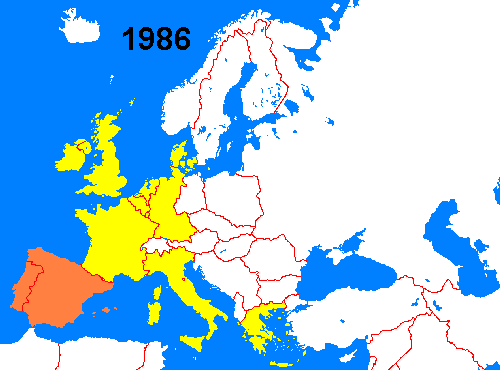
The south European countries of Spain, Portugal and Greece were at this time
dictatorships and thus not welcomed in the EC. This changed in 1974-75 when they became
democracies and first Greece and then Spain and Portugal were admitted in the EC in the 1980s.
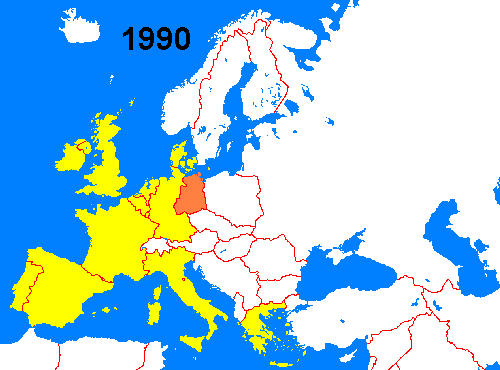
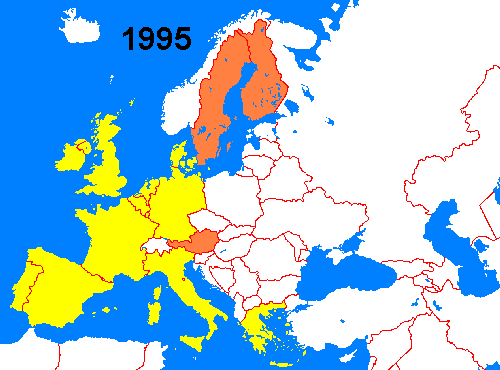
The fall of communism in 1989 meant that the iron curtain was removed and an expansion
east was made possible for the EC/EU. The east Germans became members already in 1990
as a consequence of Germany's reunification. Because the EC had been regarded as the
economic branch of NATO, several countries had not seen EC membership possible to combine
with neutrality in the Cold War. The dissolution of the Warsaw Pact changed this
and Austria, Finland and Sweden became members in 1995. Norway also tried to join
the EU at the same time but the Norwegian people voted no yet again in a referendum.
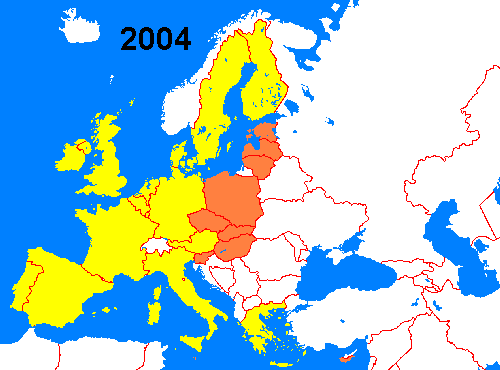
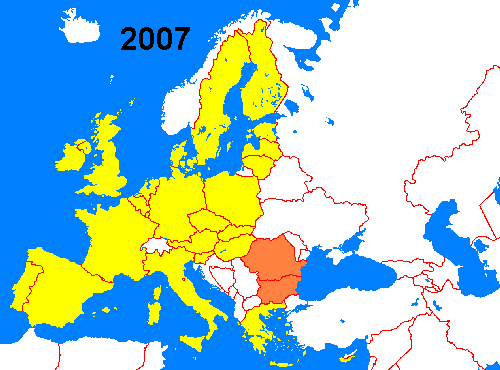
After lengthy negotiations most of the former eastern bloc were admitted in the EU in 2004.
Romania and Bulgaria had greater difficulties to comply with the EU's demands and had to wait
until 2007. Malta and Cyprus also became members together with the former communist countries.
The part of Cyprus which is controlled by Turkish Cypriots was however not allowed to join
because the the Greek Cypriots unexpectedly voted no to a plan to solve the long political
division of the island.
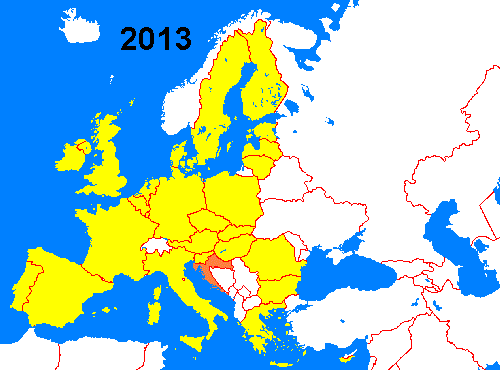
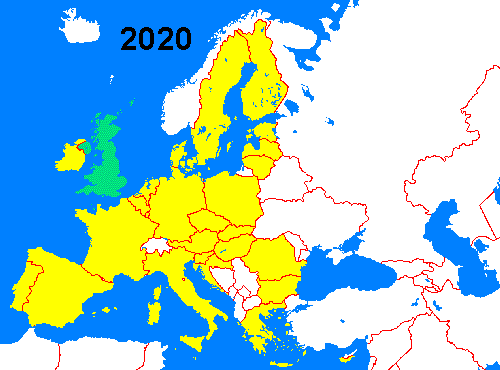
The last expansion took place in 2013 when Croatia became a member. Seven years later The EU
lost a member for the first time when the United Kingdom left as a result of a referendum.
More candidate countries are however waiting for membership, even though it is very uncertain
when the next expansion will occur.
The maps covering the EU's expansion is also available in a
sligthly larger size
on this page.
|